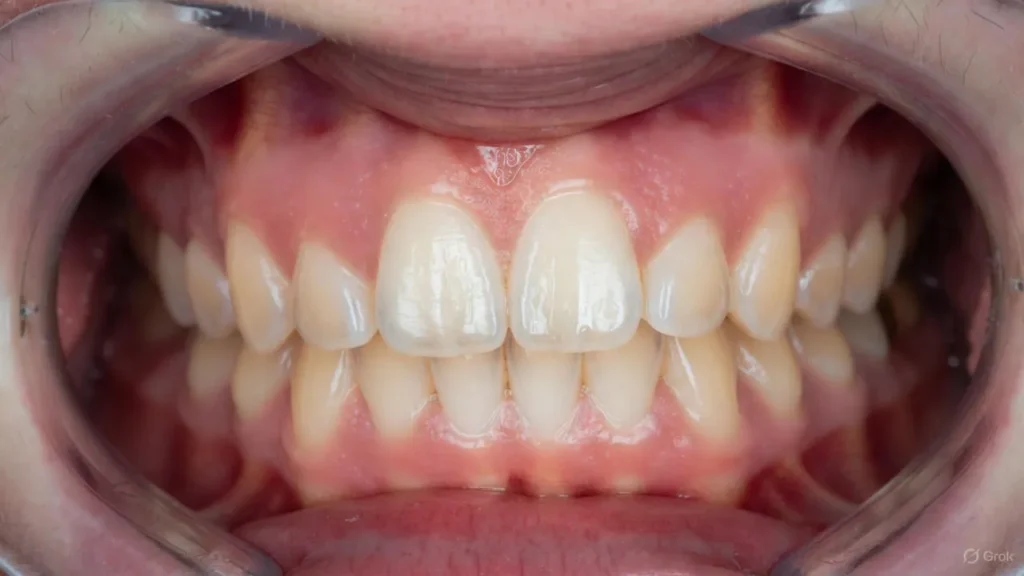
What Causes a Dead Tooth?
A dead tooth usually occurs when the blood supply to the tooth is cut off. The two most common causes are tooth decay that reaches the pulp and injuries or trauma, such as being hit in the mouth. When the nerve becomes infected or severely damaged, it stops functioning, leading to the tooth dying.
Even small cavities can progress into deeper layers of the tooth if not treated early. Over time, bacteria spread, damaging the pulp and eventually killing the nerve. In addition to altering facial appearance, mouth breathing can dry out the mouth, creating conditions that raise the risk of tooth decay and dental complications.
Dead Tooth Symptoms
Recognizing dead tooth symptoms early is one of the best ways to prevent serious problems. The most common signs include:
- Discoloration: The tooth may turn yellow, brown, gray, or even black.
- Pain or sensitivity: Some dead teeth hurt, especially if infection is present.
- Bad odor or taste: Infection can produce a foul smell.
- Swelling or gum tenderness: The surrounding gums may become inflamed.
- Loose tooth: In severe cases, the dead tooth may feel wobbly.
Not all dead teeth cause pain. Sometimes discoloration is the only visible symptom, which is why regular dental checkups are important.
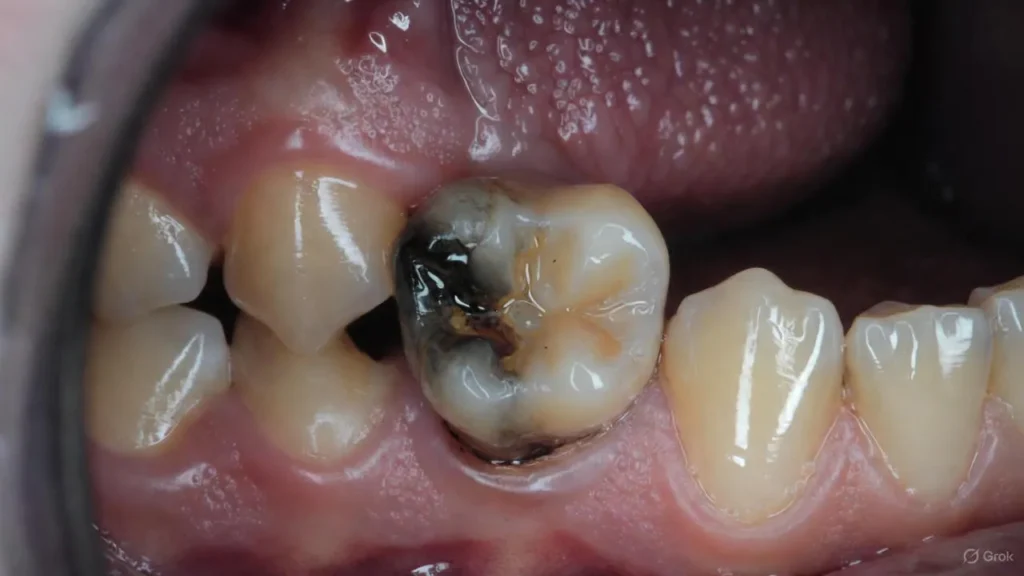
Signs Your Tooth Has Died
Many people ask whether a dead tooth filling can fix the problem. A normal filling cannot repair a dead tooth because the nerve inside has already died. However, a dentist may place a filling after root canal treatment to restore the structure of the tooth.
Here’s how it works:
- The dentist removes the dead or infected nerve through a root canal.
- The inside is cleaned and sealed to prevent further infection.
- A filling or dental crown is added to strengthen the tooth.
- A simple filling alone is not enough, but it becomes part of the final restoration process.
How Long Can a Dead Tooth Stay in Your Mouth?
Many people wonder how long can a dead tooth stay in your mouth without causing harm. Technically, a dead tooth can remain for months or even years, but that doesn’t mean it’s safe.
A dead tooth is a breeding ground for bacteria, and infection can spread to the gums, jawbone, or even other teeth. Some risks of keeping a dead tooth too long include:
- Severe toothache
- Abscess formation
- Bad breath
- Gum disease
- Bone loss around the tooth
- For your safety, dentists recommend treating a dead tooth as soon as possible to avoid complications.
- Treatment Options for a Dead Tooth
There are two main treatment approaches:
Root Canal Treatment
This is the most common method to save a dead tooth. The dentist removes the dead nerve, cleans the inside, and seals it. The tooth is then restored with a crown or filling. This option maintains your natural tooth structure.
Tooth Extraction
If the tooth is too damaged or infected, extraction may be the only solution. After removal, dentists may recommend a bridge, implant, or denture to replace it.
For a clearer understanding of which treatment may be right for you, explore our detailed treatment guide.
Preventing
Prevention is always better than treatment. Follow these tips to protect your teeth:
- Brush twice a day
- Use fluoride toothpaste
- Avoid sugary foods and drinks
- Wear a mouthguard during sports
- Visit your dentist regularly
- Treat cavities early before they reach the pulp
Taking care of your oral hygiene significantly reduces the risk of tooth decay and nerve damage.
Tooth Discoloration and Decay
When a Tooth Dies
When the nerve inside a tooth stops receiving blood flow, it gradually loses its function and begins to deteriorate. This can occur due to deep decay reaching the inner pulp or from physical trauma, such as a strong impact to the mouth. As bacteria infiltrate the inner tissues, inflammation develops, cutting off circulation and causing irreversible damage to the nerve. Over time, the affected tooth may darken, become sensitive, or cause discomfort, indicating that the inner structures are no longer healthy.
FAQ,S
What is a dead tooth?
A dead tooth, also called a non-vital tooth, occurs when the dental pulp inside the tooth dies. This can happen due to trauma, decay, or infection. A dead tooth may not always cause pain initially, but it can lead to serious dental problems if untreated. Timely care is crucial to prevent complications.
What causes a tooth to die?
Common causes of a dead tooth include untreated cavities, severe trauma, deep cracks, or repeated dental procedures. Bacterial infection can also lead to pulp death. Poor oral hygiene and gum disease may contribute over time. Early intervention reduces the risk of tooth loss.
What are the symptoms of a dead tooth?
Symptoms may include discoloration (darkening) of the tooth, persistent sensitivity, swelling, or pain in the surrounding gum. Bad breath or a bad taste may occur due to infection. Sometimes, a dead tooth shows no symptoms, making regular dental checkups important for detection.
How is a dead tooth diagnosed?
Dentists diagnose a dead tooth through physical examination, X-rays, and pulp vitality tests. The tooth may appear darker or decayed. Radiographs reveal infection or abscess formation. Early diagnosis ensures effective treatment before complications develop.
What treatments are available for a dead tooth?
Treatment options include root canal therapy, which removes the dead pulp and seals the tooth. In some cases, extraction may be necessary if the tooth is severely damaged. Crowns or restorations can restore function and appearance. Timely treatment prevents infection from spreading.
Can a dead tooth be prevented?
Preventing a dead tooth involves good oral hygiene, regular dental checkups, and early treatment of cavities or injuries. Wearing a mouthguard during sports reduces trauma risk. Addressing gum disease promptly also helps maintain tooth vitality. Prevention is more effective than corrective treatment.